Why ICP-first beats volume every time in cold outbound
Read
Ask ten GTM engineers how to find a work email and you'll get the same first answer: "run it through a provider." Ask them why their coverage is stuck at 55% and the room goes quiet. The difference between a mediocre enrichment setup and a great one isn't the provider you pick, it's the order you stack them in and what you do when each one fails.
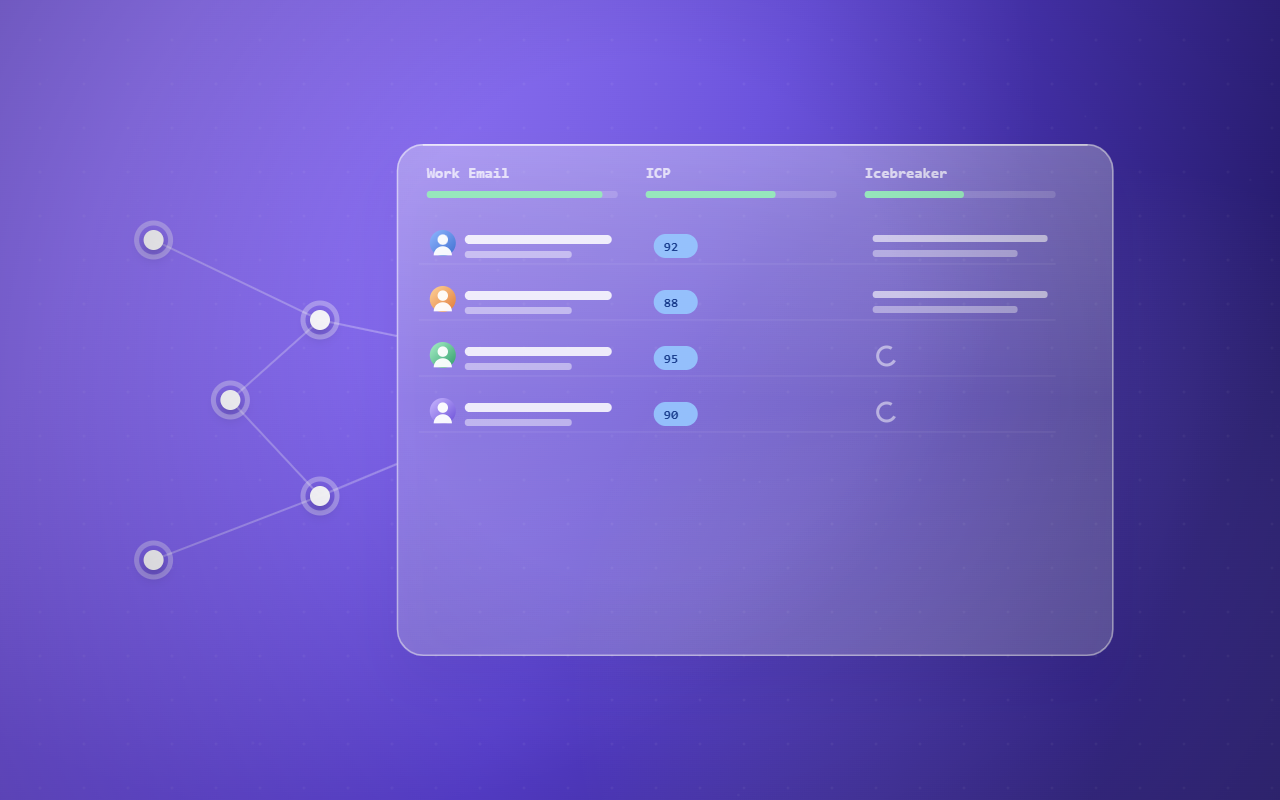
That stack is called a waterfall, and a well-built one in Clay will reliably push email coverage past 80% on a clean ICP list. Here's how we build one.
No email provider has complete data. Each one is strong in certain regions, industries and company sizes, and weak in others. A provider that nails US SaaS executives may whiff on European founders or sub-20-person startups. If you run one provider and stop, you inherit all of its blind spots.
A waterfall turns "this provider doesn't have it" into "the next provider might."
The waterfall pattern is simple: try provider A; if it returns a verified email, stop and save credits. If not, fall through to provider B, then C, and so on. You only pay for the providers you actually reach, and you capture the union of all their coverage instead of the limit of any one.
Order matters for two reasons: cost and hit-rate. Put your cheapest, highest-coverage provider first so it resolves the majority of rows before you ever touch a premium source. Then layer specialists underneath for the long tail.
Credit discipline: gate every tier behind a "run only if previous is empty" condition. A waterfall without conditions isn't a waterfall, it's four providers billing you in parallel.
A returned email is a candidate, not a fact. Every address that falls out of the waterfall should pass through verification before it ever reaches a sequencer. We run a double pass, one primary verifier, one secondary, and split the results into valid, catch-all, role-based and risky. Only the genuinely safe addresses get delivered; the rest are flagged, never blended in silently.
The metric that matters is verified emails per 100 input rows, tracked per tier. When you can see that Tier 1 resolves 60, Tier 2 adds 15, and Tier 3 adds 7, you know exactly where to invest and where you're wasting money. Most teams never instrument this, so they can't tell a coverage problem from a cost problem.
Build the waterfall, gate every tier, verify the output, and watch the per-tier numbers. That's the entire difference between a list that's 55% reachable and one that's 80%+, and it compounds into every reply rate downstream.
Want a waterfall built for your exact ICP? Book a 30-minute call and we'll map the provider stack for your market.